Future Health's
For You!
Does your child cry continously at times and you have no idea what's happening? Could be Colic
Wondering if your breastfeeding technique is correct? See the Breastfeeding video
Can your child practice yoga? Read Yoga for Children
See Child Care for a comprehensive list of babycare articles!
Need answers to your query. You will probably find them in our 'FAQ' section
Visit our Google Homepage for games, gmail, jokes, calender and fun!
What is BabyCareIndia all about?
BabyCare India.com- A site for comprehensive babycare information. For everything you need to know about babycare. BabyCare India.com is a resource site aimed at providing babycare tips specially for babies in India/Indian babies in nearby countries. The fact that a number of website reproduce western stats, methods and treatment for babycare, has promted Future Health to come up with this concept where the babycare information is given by eminent Indian doctors from prestigious institutes with a wealth of experience in Indian Babycare.
All registered users can avail a number of benefits from the site. And registration is free. Click here to register
You can share all your babycare tips at the discussion forums and create topics of your interest to interact with other parents.
Ask our Doctor is a free consultation suite where you can post your questions to which you cannot find answers in this site. Our medical team will get back to you at the earliest. And what's more! Your questions will be added to the FAQs for the benefit of others. And your privacy will be maintained of course!!
Come on and enter a world of babycare information that will be updated on a regular basis, will answer all your queries and give you the information that you need!! Welcome to BabyCareIndia.com.
Child Care
BabycareIndia.com's comprehensive childcare and babycare articles for all your babycare queries. Also see the FAQs formore information and use our 'Ask our Doctor' feature to ask our medical team any queries you may have on babycare.
Diarrhoea/Constipation in babies
Surviving the Motherhood Blues
Building Confidence in your child
Also Read Featured Articles
Women
Welcome!
BabyCareIndia's Women's section is to give you information on pregnancy and motherhood. Keep checking this space for more articles. While we are in the process of adding more information to this section, you can continue to use our 'Ask Our Doctor' feature where registered users can avail free online consultation for your health queries if you do not find answers in the below articles.
Pregnancy FAQs
Surviving the Motherhood Blues.
BabyCareIndia Shopping
For all your shopping needs. Both for you, your spouse and your baby! Search for specific items on Amazon.com or choose from BabyCareIndia's Baby Store! For a complete list of products to shop at Amazon.com!
Click here for a complete list of Amazon's products
Click here for baby care products
Attention Parents!!!
Dr. VAIDHYALINGAM
Consultant Pediatrician
It is not important for parents to know every disease and symptom that could potentially affect their child. But parents should be aware of the more significant symptoms that require timely care, in some cases, emergency care. Do not neglect the following symptoms. Take your child to a doctor immediately.
- A baby born with indifference in birth organs.
- A pre-mature baby. A baby that doesn’t cry when born.
- A baby with fever and wheezing. Body changes to blue colour. Baby that does not drink milk! Baby’s hands and legs turn icy. A swollen stomach, and a baby that cries continuously with fits.
- A baby from birth ‘till 3 months that gets a frequent fever.
- A baby that has high fever regularly (102.F & above)
- An unconscious baby
- A baby with fits. If his/her eyes suddenly turn to one side. Also if there’s less movements in hands and legs.
- A baby whose water and liquid intake has significantly decreased. A baby with stiffness of blood vessels in the neck, and a baby that turns blue.
- Heartbeat raises over normal level, a baby with difficulty breathing.
- Continuous cough, changes in contraction and relaxation of ribs.
- A baby that never likes to lie down! A baby that only wants to sit.
- Continuous vomiting, dysentery, blood & sputum in stool. Swelling of stomach.
- Dehydration sets in due to increased dysentery. Dryness of mouth, eyes, and skin.
- Continuous crying of the child due to dysentery.
- A child with fever can get measles on the skin.
- Continuous headache & sudden eye defects.
- Continuous stomach ache & vomiting
- A change in the colour of urine to red (blood), brown, black, or white or deep yellow.
- The level of excretion of urine is decreased accompanied by crying of the child in pain during passing of urine.
- Face swollen particularly under the eyes. Or a swollen foot, leg, and/or stomach.
- Anemia.
- Scorpion, snake and/or poisonous insect bites.
- Dogs and other animal bites.
- Continuous bleeding from the injured part. Excretion of blood in urine, stools, and/or sputum.
- Loss of blood from ears, nose and/or throat after an accident.
- A child that used to cry now has a rough voice and does not make a sound during crying.
- A child with continuous constipation.
- A mother is the first person to notice any changes in the condition of her child. As soon as she notices any of the above changes, she must take the child to the doctor, immediately.
Just A Minute Parents!
Article by
DR. VAIDHYALINGAM
Consultant Pediatrician
Raising healthy children can be a challenge. Mothers have no difficulty doing what’s right for their child if they know what’s required of them. But in learning and implementing good health habits, like everything else, there are obstacles. When parents adopt scientifically & medically researched information, they serve to protect their child from common health problems born through misconceptions. They also to serve to protect their child from potentially grave health risks! When receiving advice, especially regarding your child’s health or upbringing, always consider the source. Many parents are misguided (with no malicious intent) by the elders of the family, neighbors, friends or even friends of friends! Once again, I cannot emphasize it enough: Consider the source. Instead of following the wrong advices, here are some basic tips and information that you can also verify from other respectable sources such as your doctors or health care professionals. Read on to secure your child’s growth and health.
- The complexion of your child is not under your control. It depends upon your genes. Consuming saffron and/or iron tablets during pregnancy won’t change your baby’s skin colour.
- Newborns should be fed breast milk only. Do not feed him/her anything else. Cow’s milk, tinned milk, sugar syrup etc. are not recommended.
- Do not give your child donkey’s milk for throat congestion. Any throat problems warrant an immediate consultation with your pediatrician.
- ‘Till 2 years of age, an oil bath should be avoided. Oiling the nose, eyes & ears can lead to pneumonia.
- While bathing your child don’t blow through the nose and/or mouth to remove any blocks. This can also lead to pneumonia.
- Any dirt found in the eye must be immediately consulted with a doctor.
- Grandmothers or household treatments such as gripe water, onam water, rasambu, kasakasa jathikaai, maasikai, kashayam are not suitable for your child’s health.
- After the umbilical cord has been shed do not try to heal the wound with mud. Cow dung or talcum powder.
- If you are able to breast feed, it is sufficient without any supplementation for four months, and it is recommended that you not supplement with food during this time. When your child reaches six months of age, don’t feed exclusively with breast milk.
- Under circumstances where cow’s milk is your only choice after your baby has turned a month do not adulterate with water. Cow’s milk with water has the potential to cause stomach problems.
- Always boil cow’s milk first to lower the chances of contamination. Remember, if you are feeding cow’s milk due to your unusual circumstances, the milk was produced by a cow and could very well be contaminated by the same diseases the cow might have! Three words of advice: boil, boil and boil!
- Coffee & tea leads to loss of appetite in children and is hence not recommended.
- Always give your child a balanced, satisfying meal. Do not abruptly change diets unless recommended by your doctor. There may be times your child might need to eat less due to certain conditions or diseases. During these times, it might be OK to lessen the amount of food, but remember to increase frequency, and see your doctor for advice.
- Bathe your child daily. This simple act prevents a lot of diseases. Even when your child seems clean, do not skip their daily shower. Not taking showers daily is NOT recommended.
- Do not give medicines without checking with your doctor first. Purgatives to clean the stomach such as castor oil are NOT recommended.
- Do not supplement your child’s diet with tonics. Doctors advise a healthy diet. Do not believe everything you see or hear via media advertisements. They do not care about your child’s health. Those ads are there to boost their company’s business! When in dilemma about buying drink mixes, ask your doctor! Milk (pre-boiled) and unadulterated is sufficient.
- Do not self-treat your child! A crying child can be an indication of something far more significant than meets the eye. See your doctor. Children communicate through crying. Have your doctor evaluate your child. Do not guess! Your child is worth far more than that!
- If you get in trouble giving medicines on other’s advice and notice your child get more critical. Stop! Take your child to the doctor immediately and inform him/her of all the medicines your have given your child, the times given and the doses. Do not forget to inform your doctor about your child’s usual prescriptions, even if it’s vitamins! The more timely information you can give your doctor, the better your chances are of saving your child.
- Once again: Do NOT give medicines to your child without consulting a doctor. Your child could potentially become critical and the medicines you may have given, could potentially limit a doctor’s ability to treat. Do not take advice from some self-proclaimed child specialist or some one you consider broad-minded! Taking advice from such persons could be very dangerous to your child’s health. With that said, also remember NOT to give advice to your friends or family. And do NOT wait to take your child to the doctor. Do not wait ‘till your child is critical. Be a good historian and when you do take your child to the doctor, accurately describe everything!
- Buy all prescriptions promptly and give them to your child as directed. Some medicines may make your child feel better soon after. Do not stop taking the medicine even if your child is feeling better or looks very healthy. Follow the advice given by your doctor. Stopping medicines in between treatment or using only half can cause the disease to return and be more severe than the first time. Finish all medicines as per the prescription.
- Inform the doctor if your child has a documented allergy to any medicines or products. This will help the doctor and in turn help your child. Don’t expect your doctor to “predict” an allergy. If you do not inform your doctor about your child, this could be dangerous for your son/daughter. And don’t blame your doctor for an unfavorable outcome. Take responsibility. Tell your doctor about all the symptoms your child is experiencing. Your doctor does NOT live with you, so do not expect him/her to guess!
- Request pills instead of syrup when your child can tolerate them. Dose calculations are 5 times more effective with pills. If you child can only do syrups, remember to shake the bottle well before opening and giving your child the medicine. Remember - if your child vomits the medicine, s/he will not get a proper dose but do NOT give them another dose to make it up. Call your doctor.
- Do not store medicines in the refrigerator. Most medicines can be used at room temperature, unless advised by your doctor.
- Some medicines are dispensed in powder form in a bottle. Carefully follow the directions as given by your doctor or written on your medicine instruction sheet. Mix the powder with water (pre-boiled and cooled). The syrup is ready for use later.
- Do not buy medicines from an old prescription unless advised by your doctor. And do not give the medicine of one of your children to your other child.
- Do not send your child for advice and counseling with your parents (the child’s grandparents). You, the parent, needs to be there. Grandparents tend to partially or completely censor information!
- Do not keep your child from school for small reasons like a cold or sneezing.
- There is a mistaken belief that the birth of another child at home causes fortune. With this belief people give importance to the new child and ignore the other. Do not treat your child based on this superstition. It may create jealousy.
Vaccination FAQs
Some of the most common vaccination queries of parents are addressed here.
- What is vaccination and why is it important?
Vaccination is a fantastic discovery about the human defense system. Vaccines are given to boost the body's immune response in such a way that if the disease actually attacks the body, the body's police force is up and ready to fight the infection at the earliest and protect your child from getting an infection. Its one of the best examples of 'Prevention is better than cure' as some of the diseases are potentially fatal or can leave your child behind with disablities. So its important to protect your child from such diseases.
- Its the time for a vaccine but my child has a mild fever. Can vaccinations be given?
Yes. Vaccinations can be given during mild illnesses. Apart from mild fever, vaccinations can also be given if your child has an ear infection, runny nose or cough. If your child has diarrhoea, but is otherwise normal, you can go ahead with the vaccination. However make sure you tell your doctor that your child has a mild illness and if, for whatever reason, your doctor advices you against it, follow your doctor's advice. Your doctor should be able to explain why he feels that your child's vaccine can wait.
However there are certain diseases during which certain vaccines MUST be avoided. Consult your doctor if your child has advacned health issues beyond mild illnesses.
- I am afraid that my child will get 'Chicken Pox' and I was told that it can be prevented. But the vaccine is not there in both Govt and IAP schedule. Is it available? Can I give my child this vaccine?
Apart from the recommended vaccines, there are a number of other vaccines that can be given to children. However you must remember that all such vaccines are not necessary for all children and some are mandatory in highly risky areas. So you MUST consult your doctor before giving such vaccines as he is in the best position to judge the vaccine requirement for your child. You can discuss the possibilities with your doctor and take an informed decision. Click for other vaccines.
- My child was vaccinated and he has a mild fever since then. Is something wrong?
Not usually. Apart from mild fever, some children may also have a mild rash, pain at the site of infection and swelling of lymph glands. These usually occur with vaccinations and are not usually significant. Discuss the side effects of each vaccine with your doctor.
Click here to read the complete vaccination schedule with optional vaccines.
Other Vaccines
Vaccines are now available against many other diseases. They do not form part of the Universal Immunization Programme. Your doctor is the best person to advise whether these vaccinations need to be taken for your baby or not!
These optional vaccines are:
See the complete Vaccination Schedule with all optional Vaccines
Vaccination Schedule
The Indian Vaccination Schedule is given below. We present both the Govt Vaccination Schedule and the Vaccination Schedule of the Indian Academy of Pediatricians. Your doctor is the best person to advice you on the choice of vaccination schedule depending on your fears and your area of residence. However the Govt Vaccination Schedule is the bare minimum number of vaccines that your child MUST recieve.
Breast Feeding
The importance of breastfeeding can never be emphasised enough. Breast milk is the best and natural food optimized for your baby's health requirements. This section contains breastfeeding tips, certain breastfeeding myths that you must ignore and a video to demonstrate good breastfeeding technique. Click the topic of your interest below!
Pediatric Dental Care
Dr. Shahnaz Ahmed
Pediatric Dentist, West County Pediatric Dentistry.
Contrary to popular opinion, the care of an infant’s mouth sets the foundation for a healthy dental future. The American Academy of Pediatric Dentistry (AAPD) recommends a first dental visit within six months of the eruption of a baby’s first tooth, and the significance of starting early and establishing a dental home for a baby cannot be understated.
Infant oral health care starts at birth. Mothers bond with their new baby through feeding and nurture. The nurture apart from the obvious displays of affection starts with the basic hygiene needs of giving the baby baths and changing diapers. Added to this routine, it is dentally recommended that a mother use a moist wash cloth (a handkerchief sized towel) after every feeding to cleanse the baby’s oral cavity. This maintains the health of the gums and massages them in preparation for the eruption of the baby’s first teeth. This basic care builds habits that will prove invaluable for the baby’s oral health care future.
The average age for the eruption of a child’s first two teeth is six months. Most likely, it will be the bottom central incisors that erupt first but if there’s a variation from this norm in your baby, do not sweat it. It’s OK too! A lot of parents are concerned with delayed eruption. Their child turns a year old and no teeth have erupted and in comparison with their friend’s babies of similar age, this creates a level of anxiety. It’s still OK! I’ve known patients who have cut their first teeth at the age of 16 months. From a dental point of view, if I had a baby, I would prefer a delayed eruption because that protects the tooth from coming in and being exposed early to the insults of the oral cavity. Also, it makes my oral health care job easier and my responsibility less.
Speaking of responsibility, as you were advised earlier to take care of your infant’s oral cavity from birth, the responsibility to take greater care starts with the eruption of the first tooth. Many parents have asked me if it’s possible for a baby to get cavities. Some have asked, “Do we need to brush his/her teeth?” The answer is an astounding YES. If there’s a tooth, there’s a possibility for a cavity. If there’s a cavity, there’s a possibility of infection. If there’s an infection, there’s a possibility of affecting the permanent underlying dentition. If there’s a continuous untreated infection, there’s a possibility of death in rare cases. And something significant can be prevented by something very simple i.e. a toothbrush. Once the baby’s first tooth erupts, a mother will need to start using a baby tooth brush or a finger cot tooth brush twice a day preferably morning and night.
I will state a principle that when remembered will be a good guide for dental care of all ages (birth through lifetime). Dental caries is an infectious disease that causes the hardest surface in the body (the enamel of the tooth) to weaken, soften and break. There are four major players to get a “cavity”. Firstly, you need a tooth. No tooth, no cavity! Secondly, you need bacteria. The oral flora (bacterial types) in a baby’s mouth is acquired primarily from the mother and other caregivers. Thirdly, you need sugars for the bacteria to convert into acids and fourthly, you need time. Given all four factors abundantly and concurrently, a baby can get a cavity and have a tooth break off necessitating extractions at the age of 15 months.
A lot of the care I advise is based of the four major players. I tell parents that a child cannot get a cavity if there’s no teeth, but that doesn’t mean we extract all teeth to protect from cavities. I also say that a child cannot get cavities if there’s no food in the mouth. I do NOT recommend starving a baby to death to protect from cavities! We all know that teeth are important as is eating healthy. So, the next step is protection. Cutting down the bacteria in the mouth involves brushing twice a day. The bacteria start re-growing the very second one stops brushing and hence the recommendation of brushing twice to cut down on the amount of plaque (soft bacterial deposits) on the tooth.
The third factor is significant, because some parents give their babies milk and fruit juices at will. Sugars are found in a lot of foods not just candy and juices. While milk is very healthy it contains enough sugars for the bacteria to metabolize into acids. Recommendation: cut down the number of times a baby feeds if possible so the exposure to the sugars is less. If you have to feed your baby several times due to health concerns or by recommendation of a pediatrician, I would recommend having your baby drink a small sip of water to wash down and dilute the mouth after every feeding. Any milk that stays on the tooth only provides food for the bacteria to metabolize into acids and destroy the teeth. NEVER PUT YOUR BABY TO BED WITH A BOTTLE OF MILK OR JUICE! I’ve known parents to do this because they are tired from sleepless nights and their baby just won’t sleep unless given the bottle of milk/juice. My suggestion: Try to switch to a bottle with water only. Do not dilute the milk or juice as it doesn’t help with the prevention of the cavity. Ideally, before bedtime, the recommendation is to brush your baby’s tooth and after that do not give them a bottle! The fourth factor of time is an obvious one. If one maintains care of the first three factors, it shortens the time to start a cavity process.
As I’m running out of room for this article, I will end with a famous proverb. An ounce of prevention is worth a pound of cure. I have had to extract all four front teeth in babies several times due to infections and the sadness and guilt I see in a parent is not worth it. Take basic steps to brush twice and watch diet with sugar and you are well on your way to establishing a healthy dental future for your new baby.
Pregnancy FAQs
Dr. N Palaniappan
Assoc Prof of OBGYN
Sri Ramachandra Medical College
Chennai
- What are the signs and symptoms of pregnancy?
Nausea and vomiting are the earlier symptoms of pregnancy. However some women have these symptoms even before a normal period
- How accurate are the urine pregnancy tests?
Most tests are about 97% accurate. You must follow the instructions given in the reading material given with these tests. Normally you have to wait for about 3 minutes for the results
- Can I use the urine pregnancy tests?
Yes. Urine pregnancy tests are cheap and easily available for use and can be used in the convenience of one’s home.
- How early can I use the tests?
Normally you can detect a pregnancy about 2-3 days before most women expect their next period.
- Do I need counseling before I conceive?
Ideally yes. You can clarify all the doubts you have about vitamin supplementations, when to start iron, folic acid and calcium tablets, and implications of pre existing diseases or medications if any. This is essential to avoid any congenital diseases associated with drug intake during pregnancy.
- How often should I see the doctor?
Ideally, once a month for the first 7 months, once in two weeks for the next month and once a week in the last two weeks. Speak to your doctor if you need any additional visits and always follow your doctor’s advice as he/she is in the best position to understand your baby rather than any generalization.
- Are there safe medications for nausea and vomiting?
Yes. There are medications that will not affect your baby or its growth. In severe cases, you might need hospitalization for further evaluation.
- How early and how often do I need to do an ultrasound?
If you have regular periods then normally you need an ultrasound in 18-20 weeks of pregnancy to detect any abnormalities in your baby. This scan is a must for all pregnancy. Another scan at 34 weeks is optional but desirable to check your baby’s growth profile. If your periods are not regular, then you need an ultrasound at 7-8 weeks to check your baby’s viability and gestational age.
.
9. Is the ultrasound safe?
Yes. Ultrasound is a very safe investigation and has no side effects for you or your baby. And the information it gives your doctor is immense.
10. Can I have an X Ray instead?
NO. And that’s a strict no. X Rays can cause fatal abnormalities in your baby. It must be avoided at all costs.
- I am healthy. Do I still need to take iron and calcium tablets?
Yes. Even healthy women need to take iron and calcium tablets to meet the growing needs of your baby. It should ideally be started at the end of the 12th week.
- When will I feel my baby’s movement?
Normally during your first pregnancy, its normal to feel your baby’s
movements by around 18-20 weeks. During the subsequent pregnancy
you will feel it earlier.
- Smoking and pregnancy?
Well, the consequences of smoking on pregnancy are low birth weight and
pre mature babies. Think of your baby before you are tempted by that smoke.
- Can I travel?
Yes. But you must take pre-cautions. Take utmost care and avoid long drawn flights. Avoid traveling in crowded buses.
- I love food and different varieties. Can I continue eating these foods?
Yes. You can have most foods. Ask your doctor to make sure these foods do not contain anything that can harm your baby. Try to eat small frequent meals and drink plenty of water.
- Can I have sex during pregnancy?
Studies warn against having sex only if you have history of preterm
labour, previous miscarriage, placenta previa (low lying placenta), bleeding, or leaking water. Otherwise sex is safe during pregnancy.
- Do I need vaccination during pregnancy?
Yes. You need two doses of tetanus, one each in the 6th and the 9th month.
Good Habits for your child-Start Early
Dr. Radha Rajagopalan
HOD-Pediatrics, Apollo Hospitals, Chennai.
- Well, we all want to see our children growing up with good habits. That’s why it is very important to start early. The younger the child, the more unquestioning their minds will be and thus easier to inculcate good habits in them. Some of the really important habits that should be taught early are:
- Brush before bedtime- We all teach our kids to brush their teeth before eating or drinking anything in the morning. In fact it becomes a part of our lives. But how many of us insist that our children brush before going to bed? This is a very essential habit that is extremely difficult to teach later on. In fact it is very difficult to learn later on too. If you don’t brush before going to bed, this is a good time to start and pass it on to your child as well. Its important.
- Oil Bath-In olden days, it was said that boys should have an oil bath on Wednesdays and Saturdays while girls should have it on Tuesdays and Fridays. Well, the days could have been kept that way for convenience but the point, yes, our grandmothers were right. Oil bath twice a week is good for children and the young age is great time to start.
- Wash hands before eating- As kids, they tend to indulge into food as soon as they see it. Thus if this habit is not insisted every single time, they soon tend to forget it. Hands are the major carriers of germs and eating with dirty hands can easily put your child through illness. The simple answer is to make them wash hands before putting anything in their mouths. So even if it is for a snack, take your kid to wash hands before eating. And soon it will become a habit for them. Of course when they are old enough to understand, you should stress the importance of hygiene and infection.
- Cut nails once a week- Even today many of us do not cut our nails. We simply bite them off. And I don’t think we wash our nails before biting them so the risk of infection is high. And please do not underestimate this risk. So as kids cut their nails once a week so that there is no opportunity for them to bite them. And when they are older, you can teach them to cut their nails. But maintain the trimming to once a week as that how long it takes for the nail to grow big enough to bite it!
- Exercises- Teach the kids the importance of exercise at an early age. Take them for a walk and teach them simple exercises. If you have a pet dog, you can train the kids to take them for a walk. Of course if you need to exercise yourself, take this hint. You should start too and that way you can have a healthy life to devote to your kids.
- Sleep- Well, this is a very important thing to teach your kids. Make sure they are in bed by 830 or 9 PM and wake them up by 6 in the morning. Those of you who believe your kids do not sleep early, wake them up at 6 AM whatever time they sleep. You will notice that in a few days, they will get to bed early too as they will be tired out. Its your duty to teach them the ‘Early to bed, early to rise’ principle.
- Variety in food- Just because your kid likes one type of vegetable, do not cook the same for him everyday. Introduce a variety of foods for your child and get them acquainted to different food types. This way you child will be able to adapt to different foods.
Its very important to teach them to respect elders. Especially in nuclear families where the scope to interact with elders is very low, it is important to emphasize the aspect of respect.
So these are some of the important habits to inculcate into your child that will make them less prone to infection, give them healthier teeth, keep them healthy and save you a whole lot of trouble and money. More importantly, they will make your kids better people when they grow up. Good luck!
Teach your kids to feed themselves
Dr Radha Rajagopalan
HOD-Pediatrics
Apollo Hosptials, Chennai
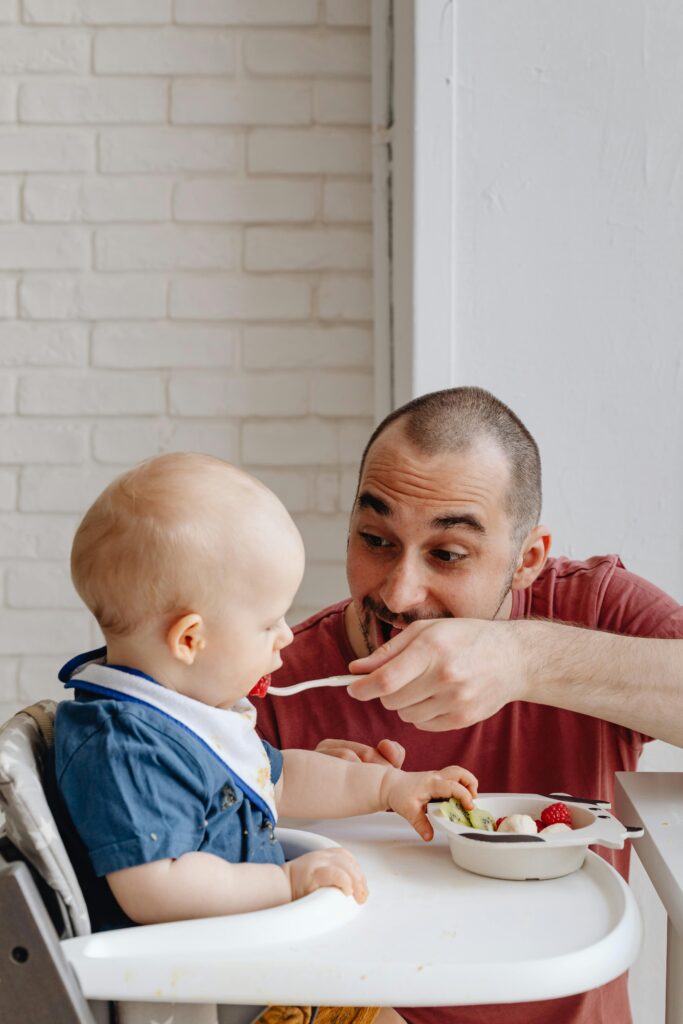
Eating is an art! Kids imitate their parents in most issues and table manners & eating are no exceptions. Generally kids do not like foods that their parent don’t eat (the key word is generally, later on friends and peer pressures take over)
It’s at a particular age (usually 9 months) that kids bring their thumb and forefinger together to pick up foods and put them in their mouths. This is called as the ‘Pincer Grasp’. This is when, if you place small pieces of food in their plates, they tend to pick up and eat. Of course there will be a few spills, but that’s alright. Just because your kids spill food while trying to eat is no reason for you to physically place the food in their mouth. Especially after the age of 5, there should not be a reason to feed your kids. It is proven that such practices affect the kid’s individuality and not to mention, makes them lazy. Some parents tell me that their child does not eat unless they feed them. Well, at times you have to teach them certain habits even if your child is adamant.
Timing of meals is extremely important. Set times for breakfast, lunch and dinner for you kids and stick to these times. Even if there is a change in the time of one meal, it affects the time of the next meal and hence kids will not eat properly at the next meal. If there is an undue delay in the time of one meal, try not to force the meal to your child later. As, in if you miss breakfast which is usually had at
Do not place a huge heap of food on your kid’s plate. Always serve little at a time and encourage them to take more. This way your kids will not feel intimidated at the amount of food and will eventually eat to their fill. So parents who complain that your kids do not finish their meal, the next time, place a little less on their plates.
Also a balanced diet is very important for you kids. Try to make sure there are two types of vegetables for every meal and do not repeat the same vegetables every day. Even when you serve meat or chicken or fish, try to make sure that there is at least one vegetable also in their meal.
Though it is important to teach your kids about food timings, do not force your kids to eat if they do not feel like eating. It is important to maintain the balance of teaching your kids and not forcing them. If they miss a meal as they are not hungry, it is alright. But of course it should not become a habit for them to keep missing meals or eat at unearthly hours. If you kids do not eat properly on a consistent basis or if they are losing weight, take them to your pediatrician to diagnose worm infestations or other problems at an early stage.
And yes avoid junk food for you kids at an early age. Its ok to have chips and biscuits once in a while, but make sure that they do not gorge on it and skip meals. And the lesser they see of carbonated drinks, the better!
Bringing your child to the doctor
Bringing your child to the doctor .
Dr Radha Rajagopalan
HOD-Pediatrics
Apollo Hospitals, Chennai
The relationship between the doctor and your child starts from birth. Your pediatrician knows the nuances and milestones that your child must attain at particular ages. The babies who don't protest visiting the doctor for vaccinations, start their tantrums usually at the age of 15 months, when they come in for another vaccination appointment. That's when they seem to associate the doctor with injections. More often than not, the children start crying at the very mention of the doctor or as soon as they see the doctor's clinic. Some of the youngsters will not allow the doctor to examine them and will hide in their mother's sari. So it is very important for every mother to create a very good rapport with their child's doctor. Tell your children who their doctor is, what s/he does and why s/he gives medicines and injections. If your child falls sick and gets treated, you could impress upon your child that s/he got better because the doctor gave him the medicines.
When you take your children for a check up, tell them that they will not get an injection that day. But before that visit, make sure you know that there will not be a vaccination. Do not threaten your children with taking them to the doctor for injections if they do not obey you or do something wrong. That will create the impression of their doctor being a terror. The more comfortable your children are with their doctor, the better it is for them. And do not lie to your children about injections if you can help it. That will not only teach them to lie, but your child will not trust you about his doctor.
I have seen a lot of children who cooperate because of the real hope of getting better. When this type of confidence is instilled by the parents, your doctor can do the rest!
Featured Articles
Articles by eminent doctors in our panel!
Dr. Radha Rajagopal, HOD Pediatrics, Apollo Hospitals,Chennai
Taking your child to the doctor
Teach your kids to feed themselves
Dr. Vaidhyalingam, Consultant Pediatrician,
Deaths after Vaccination in Chennai
Deaths after Vaccination in Tamil Nadu
Panic gripped the state after 4 children dies after receiving the measles vaccination in Tamil Nadu. The govt. has stopped the vaccination program and has ordered a high level inquiry into the incident apart from suspending all those who administered the vaccine.
Anaphylaxis- which means that the baby has an allergy to the components of the vaccine and has developed an allergic reaction. This can happen to any medication.
Expired Vaccines- Expired Vaccines are extremely dangerous and SHOULD NOT be administered.
Un sterile Syringes- These are for causing problems, tetanus infections etc.
Vaccines are essential to prevent diseases in children. Some vaccines prevent dangerous diseases like polio, tetanus and diphtheria etc which if affect you child can be very traumatic for you child, causing huge financial implications for you, and sometimes can even be fatal. So vaccines are essential for you baby
How can I prevent these types of dangers associated with vaccines?
Anaphylaxis is an unfortunate event that can be detected only after it occurs. This can happen with any medications. Most of the vaccines are non reactive and do not cause anaphylaxis, but we can never predict our body’s response. Thus for any inject able drug, including vaccines should be taken in a hospital setting with a loaded ‘Adrenaline’ syringe which is the first drug to be given in case of anaphylaxis. This is a life saving precaution and should be followed ideally in all conditions where indictable are being administered. Once adrenaline is given, the patient can be transferred for further management.
Checking the expiry date of the vaccine is a simple, effective and essential way of preventing these complications related to expired vaccines. Also check the syringe for any expiry date if applicable.
Sterile Instruments- Make sure that only sterile injections are used to administer a vaccine to your baby in case of injectables.
Bathing FAQ
1. When should I start bathing my baby?
You can start bathing your baby in the first 10 days with clean plain water. However avoid giving a full bath to your baby before the umbilical cord has fallen off. You can use clean cloth dipped in plain water to wipe your baby clean in the first few days.
2 How often should I bathe my baby?
During summer or even in winter months, when it is hot, you can bathe him everyday. But when its cold, twice or thrice a week is more than sufficient. However make sure you clean your baby’s hands, groin, neck and face everyday even in cold months. It can be done with warm water and should be wiped off immediately.
3. Should I use baby soaps?
You can start using non scented soaps or good branded baby soaps after the first 10 days. Remember not to use soaps in the first few days of birth.
4. Can I use oils for my baby?
Yes. You can use coconut oil or mustard oil for applying on your baby’s body or for a light massage. Olive oil is more expensive, however not necessarily better, so you can stick to coconut oils.
5.Can I use powder on my baby?
Try to avoid talcum powder on your baby. Especially in the first few days, avoid even baby powders or baby creams. And do NOT use powders on your baby’s face as it can lead to aspirations (aspiration is when something other than air enters your baby's lung through its nose or mouth).
6. What should I check in a baby powder or baby cream?
Look into the ingredients of the powder or cream and avoid anything that has liquid paraffin in them. Especially in the first few days of birth, avoid using any such powders or cream.
7. Can I use shampoos for my baby?
Yes. You can. After the first few days, you can use a good shampoo, but ideally the shampoo should be diluted. A dilution of 1:3 or 1:4 (One part of shampoo with 3 or 4 parts of water) should be ideal.
8. My grandmom says I should pour oil into my baby’s nose and ears. Can I do that.
With all due respects to our grandmoms, and yes, sometime they are right but however, certain practices are very harmful to your child and this is one among them. DO NOT POUR ANYTHING INTO YOUR BABY’S NOSE OR EARS. It can be fatal sometimes. Your baby can aspirate the oil and becomes very difficult to treat or save your baby if this happens.